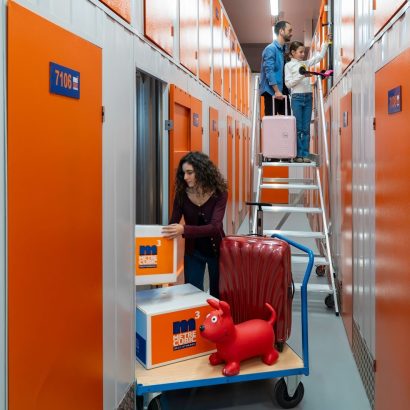
A renovation does not start on the day the professionals arrive. Before that, rooms need to be cleared, furniture removed, boxes moved, delicate items protected and passageways freed up so the work can be carried out safely and in an orderly way.
In this context, renting storage units for renovations makes sense when there is not enough space to keep furniture and belongings inside the home or premises without exposing them to dust, paint, moisture, knocks or constant movement.
A storage unit allows you to remove items from the work area and retrieve them once the space is ready again. The key is deciding what to store, what not to store, how to protect each item, how much space you may need and how much leeway to allow in case the renovation takes longer than expected.
During a renovation, it is advisable to rent a storage unit when furniture and boxes cannot remain in the work area without getting in the way or being exposed to damage. Before choosing one, it is worth calculating which items need to be removed from the home or premises, how much space they take up and which ones you may need to retrieve while the work is under way.
When it makes sense to rent storage units for renovations
A storage unit is useful when the renovation affects areas containing furniture, boxes or other items that cannot remain in place without getting in the way or risking damage.
The most common situations are:
- full home renovations;
- kitchen, bathroom, living room or bedroom renovations involving a lot of furniture;
- painting, flooring replacement, carpentry, installations or work that generates dust;
- lack of space to move furniture from one room to another;
- the need to clear hallways, access points or work areas;
- phased renovations that require items to be moved several times;
- work in commercial premises with furniture, archives or materials that need to be temporarily removed.
A storage unit does not replace proper renovation planning. It helps remove what is in the way, protect what needs to be kept and prevent the home or premises from turning into a storage area during the work.
Where to store furniture during a renovation
One of the most common questions before starting work is where to store furniture during a renovation if there is no room for it elsewhere or leaving it in the property may expose it to damage.
The main alternatives are:
| Option | When it works | Main limitation |
|---|---|---|
| Leave it in another room | Small or localised renovations | Reduces available space and may mean moving it several times |
| Cover it in the same room | Short, low-impact work | Does not always protect it from dust, knocks or moisture |
| Take it to a relative’s home | Few items and easy transport | Depends on available space and how easy the items are to move |
| Use a temporary storage unit | Renovations involving furniture, boxes or bulky items | Requires organising transport, packing and subsequent access |
When the renovation affects several rooms or includes work involving dust, paint, flooring or installations, storing furniture and boxes outside the work area usually creates more room to work and reduces unnecessary moving.
Which furniture and items to remove before the renovation starts
Before renting a storage unit or preparing the move, it is worth identifying which items really need to be removed from the work area. Not everything has the same priority or requires the same level of protection.
| What to remove | Why remove it |
|---|---|
| Sofas, armchairs and mattresses | They are bulky and can absorb dust, moisture or odours. |
| Tables, chairs and occasional furniture | They take up passageways and make the work more difficult |
| Dismantlable wardrobes | They can be damaged if they need to be moved repeatedly inside the home |
| Boxes of clothes, books or decorations | They can deteriorate due to dust, moisture or knocks |
| Uninstalled appliances | They get in the way, especially in kitchens, utility rooms or technical areas |
| Documents and archives | It is best to keep them separate from the work and easy to locate |
| Seasonal items | They are not needed during the renovation and take up useful space |
| Fragile or decorative items | They can break during moving or construction work |
The selection should be based on three criteria: use, volume and fragility. Anything that will not be used during the renovation and could be damaged should be removed before work begins.
What you should not store without checking first
Not everything should be moved directly into the storage unit. Some items need cleaning, protection, drying or a prior check.
Before storing belongings, it is worth reviewing:
- food, plants or perishable products;
- open liquids or poorly sealed containers;
- cleaning products, paint or other sensitive materials;
- valuables that should remain in your personal custody;
- documents you will need during the renovation;
- clothes, textiles or mattresses without protection;
- damp or recently cleaned furniture that is not yet completely dry;
- construction waste, rubble, soil, paint or materials generated by the renovation.
Construction waste should not be mixed with personal furniture and boxes. Spain’s Ministry for the Ecological Transition and the Demographic Challenge includes among construction and demolition waste the materials generated during construction, refurbishment, repair, renovation or demolition work on buildings.
The practical rule is simple: the storage unit should receive items that are clean, dry, protected and sorted. Anything that could stain, generate odours, deteriorate or be needed urgently requires a prior check.
How to protect furniture and boxes during a renovation
Storing furniture during a renovation is not just a matter of taking it out of the property. It also needs to be prepared so that it can remain in storage for several weeks and come back in good condition.
Moisture deserves particular attention. The United States Environmental Protection Agency notes that moisture control is essential for preventing mould growth and recommends cleaning and drying wet materials quickly.
Large furniture
Before moving large pieces, it is advisable to empty them, clean them and protect delicate areas.
Basic recommendations:
- empty drawers and shelves;
- protect corners and exposed surfaces;
- separate parts when furniture is dismantled;
- keep screws, fittings and small parts together;
- label dismantled components;
- avoid placing weight on fragile furniture;
- check that the furniture is completely dry before storing it.
Boxes
Boxes should be properly closed and labelled not only according to what they contain, but also according to when you may need to retrieve them.
A simple system is to mark three pieces of information:
| Information on the label | Example |
|---|---|
| Contents | Books, crockery, clothes, tools, documents |
| Room of origin | Living room, kitchen, bedroom, office |
| Retrieval priority | High, medium or low |
This makes it easier to find an item during the renovation without having to open several boxes.
Delicate items
Crockery, lamps, pictures, mirrors, glassware, small appliances and fragile decorations require specific protection.
It is advisable to keep them separate from heavy furniture and make sure they are not placed underneath boxes or bulky items.
How much storage space you may need during a renovation
The space required depends on the actual volume of furniture, boxes and other items that need to be removed from the work area.
Before choosing a size, it is therefore better to prepare a small inventory including:
- the approximate number of boxes;
- large pieces of furniture;
- appliances;
- dismantled components;
- delicate items that cannot be stacked;
- items that may need to be retrieved during the renovation.
As a first guide, at Metrecubic we have a size guide where a 1-2 m² storage unit can be suitable for a few boxes and compact items, while a 2-4 m² unit can already accommodate items such as a sofa, a bed, appliances and more boxes.
When furniture from several rooms needs to be stored, the amount of space required increases and a specific assessment is advisable.
See our guide on how to choose the ideal storage unit size to calculate the space you need before renting.
There is another important factor: you do not need the same amount of usable space if your goal is to make the most of every square metre as you do if you need to enter the storage unit regularly.
If you will need to retrieve clothes, tools, documents or certain boxes during the renovation, you should leave enough room to access them.
How to organise the storage unit if you need access during the renovation
During a renovation, you may need to retrieve something that has already been stored: a tool, documents, a box of clothes or a personal item.
In this case, the storage unit should therefore be organised with access in mind, not just to maximise the use of space.
It is advisable to:
- place at the back anything you will not need until the end;
- keep boxes you may need near the entrance;
- group items by room;
- keep labels visible;
- leave a small access aisle;
- avoid placing weight on fragile boxes;
- keep dismantled furniture components clearly identified;
- take a photograph of the storage unit once it has been organised.
The aim is to be able to locate what you need quickly without having to empty part of the unit every time you need to retrieve something.
If you want to make better use of the space without losing accessibility, see our guide to organising your storage unit efficiently.
How long to rent a storage unit and what to do if the renovation takes longer
The rental period should be calculated based on the actual renovation schedule, not only on the expected completion date.
Delays can arise during a renovation due to materials, installations, finishes or coordination between different professionals.
| Situation | Practical recommendation |
|---|---|
| Short, localised renovation | Match the rental period to the expected duration of the work |
| Renovation involving several trades | Allow extra time for coordinating the work |
| Full renovation | Plan for furniture to be retrieved gradually |
| Renovation of commercial premises | Coordinate storage, cleaning, installation and reopening |
| Uncertain completion date | Avoid planning the rental period too tightly |
We offer monthly rentals with no long-term commitment, cancellation with prior notice and the possibility of changing unit size subject to availability.
This flexibility can be particularly useful during a renovation: if more items ultimately need to be stored, if the work takes longer than expected or if some furniture can be retrieved earlier, the rented space may need to be adjusted.
If the renovation is delayed, it is worth reviewing:
- which items can remain in storage;
- which boxes you will need earlier than expected;
- whether the organisation of the unit allows easy access to urgent items;
- whether the rented size still matches the volume being stored.
What to check before renting a storage unit for a renovation
In addition to price, it is worth reviewing the practical conditions of the service before renting a storage unit.
| Point to check | Why it matters during a renovation |
|---|---|
| Size | The volume changes depending on whether you store assembled furniture, dismantled pieces, appliances or only boxes |
| Access | You may need to retrieve items during the work |
| Possibility of changing size | The amount stored may vary as the renovation progresses |
| Cancellation conditions | The actual duration of the work may differ from the original estimate |
| Transport | You need to plan how furniture, boxes and delicate items will be moved |
| Insurance or coverage | It is important to know what protection applies to the stored belongings |
At Metrecubic, we offer storage unit rental options in Sabadell, Girona and Empuriabrava, with different sizes, 24/7 video surveillance, controlled access and alarm systems.
Common mistakes when storing furniture during a renovation
Leaving furniture in the middle of the work area
Covering a piece of furniture is not always enough. If there is dust, paint, moisture or constant movement of tools and materials, the risk of damage increases.
Storing boxes without labels
An unlabelled box means opening several boxes to find one item. During a renovation, this causes wasted time and unnecessary disorder.
Not separating urgent items from less important ones
Everyday clothes, documents, tools or items needed during the work should not end up at the back of the storage unit.
Storing damp furniture
Furniture, textiles, rugs or mattresses should be dry before storage. Moisture can encourage mould growth and unpleasant odours.
Stacking weight on delicate items
Fragile boxes, lamps, glassware and decorations should be kept separate from heavy furniture.
Allowing too little time
A renovation may take longer than expected. If the rental period leaves no leeway, you may reach the point of having to retrieve the furniture before the space is ready for it.
Choosing the size without making an inventory
Renting a storage unit without knowing approximately what you are going to store increases the risk of running out of space or paying for space you do not need.
Frequently asked questions about storage units for renovations
When should you rent a storage unit during a renovation?
When the renovation affects rooms containing furniture, boxes or other items that could be damaged, get in the way or need to be moved repeatedly during the work.
Where should you store furniture during a full renovation?
If it cannot be moved to another room in the property, one option is to store it temporarily outside the work area. A storage unit frees up space and reduces exposure to dust, knocks or stains.
How many square metres of storage space do I need for a renovation?
It depends on the volume of furniture and boxes. The most useful approach is to prepare an inventory and use a size guide as a reference before renting.
What should I not store in a storage unit without preparing it first?
Particular attention should be paid to damp items, unprotected textiles, food, plants, open liquids, sensitive products, construction waste and documents you may need while the work is in progress.
What happens if the renovation takes longer than expected?
It is worth checking whether the rented space is still suitable, which boxes you will need to retrieve earlier than planned and whether the organisation allows easy access to them. If the stored volume changes, it may also be useful to consider a different unit size.
Store your furniture and boxes while the renovation is under way
A renovation does not only require deciding what will change in the home or premises. It also means planning what to do with furniture, boxes and belongings while the work is under way.
Storage units for renovations make it possible to free up work areas, protect belongings and organise their retrieval once each space is ready again.
The key is to decide what needs to leave the work area, protect furniture and boxes properly, label them with retrieval in mind, calculate the required space using an inventory and allow some leeway in case the renovation takes longer than expected.
Contact us to assess what you need to store during the renovation and find a storage unit suited to the volume, duration and type of items you need to store.