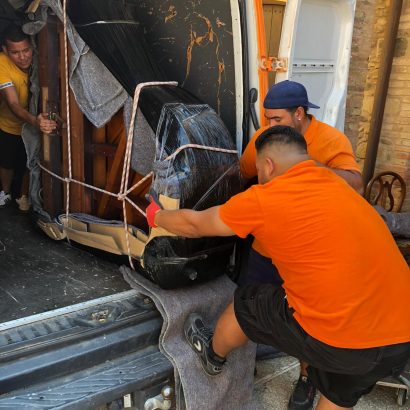
When a move includes large appliances such as a refrigerator, washing machine, dishwasher or freezer, part of the preparation must be carried out before moving day.
During a move, not all appliances should be prepared in the same way. A refrigerator must be empty and prepared according to its manufacturer’s instructions; for a washing machine, the connections and the transport systems designed for the drum must be checked; and a built-in appliance may require prior disconnection or removal.
For this reason, when moving house with appliances, each appliance must be checked individually and taken into account as part of the overall planning for the move.
Which appliances you should check before the move
Before you begin, make a list of the appliances that will be taken to the new home. This will allow you to identify which tasks must be completed beforehand and arrange any emptying, disconnection or specific preparation in good time.
| Appliance | Main aspect you should check |
| Refrigerator or fridge | Interior and transport position |
| Freezer | Emptying and defrosting |
| Washing machine | Hoses and drum transport systems |
| Dishwasher | Connections and interior parts |
| Dryer | Water tank and model features |
| Oven | Trays, racks and installation |
| Built-in appliances | Disconnection and removal |
Not all appliances are prepared in the same way. For this reason, before a move, it is advisable to check the specific transport instructions provided by each model’s manufacturer.
How to prepare appliances before a move
Before moving day:
- Check the manual to see whether the appliance has specific transport instructions.
- Empty the appliances when necessary.
- Arrange for them to be disconnected in advance.
- Remove or secure any interior parts that could move.
- Keep the cables, hoses and accessories for each appliance together.
- Prepare built-in appliances in advance.
- Check the dimensions of the largest appliances.
Preparation should be carried out taking into account the type of appliance and its manufacturer’s specific instructions.
How to prepare each appliance for the move
Refrigerators and freezers
If the refrigerator is part of the move, organize its contents in advance so that it can be empty before moving day.
Also remove or secure the trays, drawers and other interior components that could move while the appliance is being handled.
For a freezer, plan the emptying and defrosting in advance when required by the model. Follow the manufacturer’s instructions so that the appliance is ready when loading begins.
Can a refrigerator be transported lying down?
There is no single recommendation that applies to all refrigerators.
The correct transport position and the instructions to follow before reconnecting the appliance may vary depending on the model. For this reason, always consult the manual or the manufacturer’s specific instructions.
Do not assume that a recommendation that applies to one refrigerator can automatically be applied to another model.
Washing machines and dishwashers
Before moving a washing machine or dishwasher, check the hoses and connections and make sure that the appliance has been prepared according to the manufacturer’s instructions.
Also make sure that no residual water remains in the appliance or the connections.
For a washing machine, check the manual to see whether the model uses bolts, locks or specific transport systems to protect the drum or its suspension system during the move.
For the dishwasher, check the baskets and any other interior components that could move.
Keep the hoses, cables and accessories labelled so that you know which appliance they belong to when it is time to install them in the new home.
Dryers and ovens
If the dryer has a water tank, make sure that it is empty before the move and check the specific instructions for the model.
Before moving an oven, remove the trays, racks and other separate parts from the interior.
These parts must be stored and labelled to prevent them from moving inside the appliance during handling.
Built-in appliances
Built-in appliances require special planning because their preparation may include disconnection and removal from the cabinetry or installation.
Do not leave this task until moving day.
If the installation requires technical knowledge, arrange for the appropriate professional to attend in advance.
Before hiring the moving service, also confirm which items must already be disconnected or removed when the moving team arrives.
How to protect appliances during a move
Once empty and prepared, appliances must be protected before they are handled and loaded.
External surfaces may suffer knocks or scratches while passing through doors, hallways or loading areas. It is also necessary to make sure that doors, interior parts and other moving components cannot shift during handling.
The protection and handling systems must be suited to the appliance, its weight, its dimensions and the characteristics of the route.
Do not use the inside of a refrigerator, washing machine or oven as an additional box for carrying items during the move. Appliances must travel prepared for handling and without loose items inside them.
What should be ready before the moving company arrives
When a move includes large appliances, it is important to confirm in advance which tasks the owner must complete before the team arrives.
As a general rule, it is advisable to have the following ready:
- Empty refrigerators and freezers.
- Appliances prepared according to their manufacturer’s transport instructions.
- Hoses and accessories organized.
- Built-in appliances whose disconnection or removal must be carried out by another professional.
- Clear access routes.
- Any access difficulties communicated in advance.
Do not wait until moving day to report an appliance that is particularly large, built in or located in an area with difficult access.
The specific preparation will depend on the service booked and the characteristics of each appliance. For this reason, it is advisable to confirm in advance with the moving company what must be ready before the team arrives.
Check access routes for the largest appliances
When moving large appliances, the dimensions of some items may affect the route to the loading area.
This can happen with:
- Large refrigerators.
- Chest freezers.
- Appliances that do not fit in the elevator.
- Appliances located on floors accessed by stairs.
- Homes with narrow doors or hallways.
- Difficult exterior access.
Before the move, compare the approximate dimensions of the appliance with the main access points along the route.
Do not check only the main door. Also check the turns, the elevator opening, the stairs and the route to the loading area.
The same check must be carried out at the new home. A refrigerator may leave the original property without difficulty but be difficult to move into the destination kitchen.
When a lifting platform may be necessary
If an appliance cannot follow the planned route through the inside of the building, it may be necessary to consider an alternative access route.
Narrow stairs, the lack of an elevator or the dimensions of the appliance may make it necessary to consider using a professional lifting platform as part of the move planning.
The weight and dimensions of the appliance, together with the characteristics of the property, determine whether the interior route can be used or whether another loading method should be considered.
What information you should provide to the moving company
When requesting information or a quote, indicate which appliances are included in the move along with the rest of the furniture and belongings in the home.
This information is particularly important when moving large or built-in appliances, or appliances located in areas that are difficult to access.
Be sure to notify the company especially if there are:
- Large refrigerators or freezers.
- Built-in appliances.
- Appliances that do not fit in the elevator.
- Narrow stairs or landings.
- Doors with limited clearance.
- Difficulties with exterior access.
It is not only a matter of knowing which appliances are in the home, but also whether any of them may affect loading, the route or unloading at the destination.
If there is a particularly difficult access point, it may be useful to provide photographs or additional information before moving day.
Common mistakes when preparing appliances for a move
Leaving the emptying until the last minute
Refrigerators and freezers may require preparation in advance.
Organizing their contents in advance prevents them from still being full or awaiting preparation when the move begins.
Not checking the appliance’s transport instructions
The way a refrigerator or washing machine is prepared may vary depending on the model.
Do not automatically apply general recommendations without checking the manufacturer’s instructions.
Not checking the connections
Hoses and other components must be prepared before moving a washing machine or dishwasher.
You should also check whether any residual water remains in the appliance or the connections.
Forgetting the interior parts
Trays, drawers, baskets and racks may move during handling.
Remove or secure them according to the appliance’s characteristics and instructions.
Mixing up cables, hoses and accessories
Group the items for each appliance together and identify which appliance they belong to.
This makes them easier to find in the new home.
Not checking the route
An appliance may fit perfectly in its current location but be difficult to move through a door, around a turn or into the elevator.
Check the entire route at both the origin and the destination.
Reporting difficult access on moving day
If the move includes a particularly bulky appliance, report any known difficulties in advance.
Difficult access may change the equipment required or the way the loading is organized.
Frequently asked questions about moving with appliances
Who should disconnect the appliances before a move?
It depends on the appliance, its installation and the service booked.
Before the move, confirm with the moving company which appliances must be disconnected in advance. For built-in appliances or installations that require technical knowledge, it may be necessary to arrange for the appropriate professional to attend.
Does the moving company protect appliances during the move?
Appliances must be protected and prepared to prevent knocks, scratches or movement of their components during handling and transport.
Before hiring the service, confirm which preparation tasks must be carried out by the owner and which protection and handling systems are included in the move.
Prepare your appliances before moving day
Before moving with appliances, identify which items will be moved, check the instructions for each model and prepare any appliances that need to be emptied, disconnected or prepared in a specific way.
You should also report any appliance that is particularly large, built in or located in an area with difficult access.
If you are organizing a house move that includes a large refrigerator, built-in appliances or appliances that may be difficult to move along the route, contact Metrecubic and tell us what you need to move and what the access routes are like.